Finance Isn't About Numbers
When I started leading conversations with investors, the questions that caught me off guard weren't the ones I'd prepared for in Excel or "backpocket docs". They were often about the products behind the financials. The metrics might have existed somewhere in the business. I just hadn't thought to look for them.
Much of my early training in finance involved mastering the numbers. Understanding the three financial statements, building models, reconciling data, and figuring out how a one-percentage-point change in gross margin flows through to operating income.
All important skills. But I was beginning to realize that knowing how to answer a question wasn't quite the same as knowing which questions to ask.
It's possible to get the numbers right and still misunderstand the business.
As I moved into strategic finance, I began applying those same skills to a different question: what might happen next?
One of the most useful habits I picked up was working from hypotheses: start with something you believe might be true, then look for evidence that could prove you wrong.
From questions to judgment
In October 2026, Mark Zuckerberg shared some impressive early numbers for Muse, Meta's new AI agent. More than 10 million people in the U.S. and Canada had set it up in roughly six weeks, and about 25% were using it on any given day. Zuckerberg described the product as having achieved product-market fit. (Meta Q3 2026 earnings call)
Those are encouraging numbers. But what do they tell us about Muse's future economics?
Who are those first ten million users, and will the next hundred million behave similarly? How much revenue can Meta generate from them, and at what cost?
Meta intends to keep Muse free for most users, generating revenue through commerce, subscriptions, and business services. It also expects to improve Muse's compute efficiency by more than tenfold over the next year. That could substantially change the economics.
A spreadsheet can calculate the implications of different scenarios, but it can't tell us which assumptions are most likely to hold.
A forecast begins as an expression of your judgment and becomes a test of it.
Once those assumptions enter a model, their implications become harder to ignore. Perhaps the numbers reveal that even our most optimistic expectations won't produce an attractive return. Or maybe a story that initially sounded implausible becomes more convincing once we examine the economics.
Neither the narrative nor the model gets the final word. As actual results come in, we can test how well our assumptions held up.
Understanding people
I've bought four things for my home office through Muse. Three were ordered and delivered without a hitch. The fourth was an air filter, and I ended up with the wrong model.
I'm willing to overlook a mistake like that because I enjoy trying new AI products. But if I still find Muse useful, how much does that really tell us about everyone else?
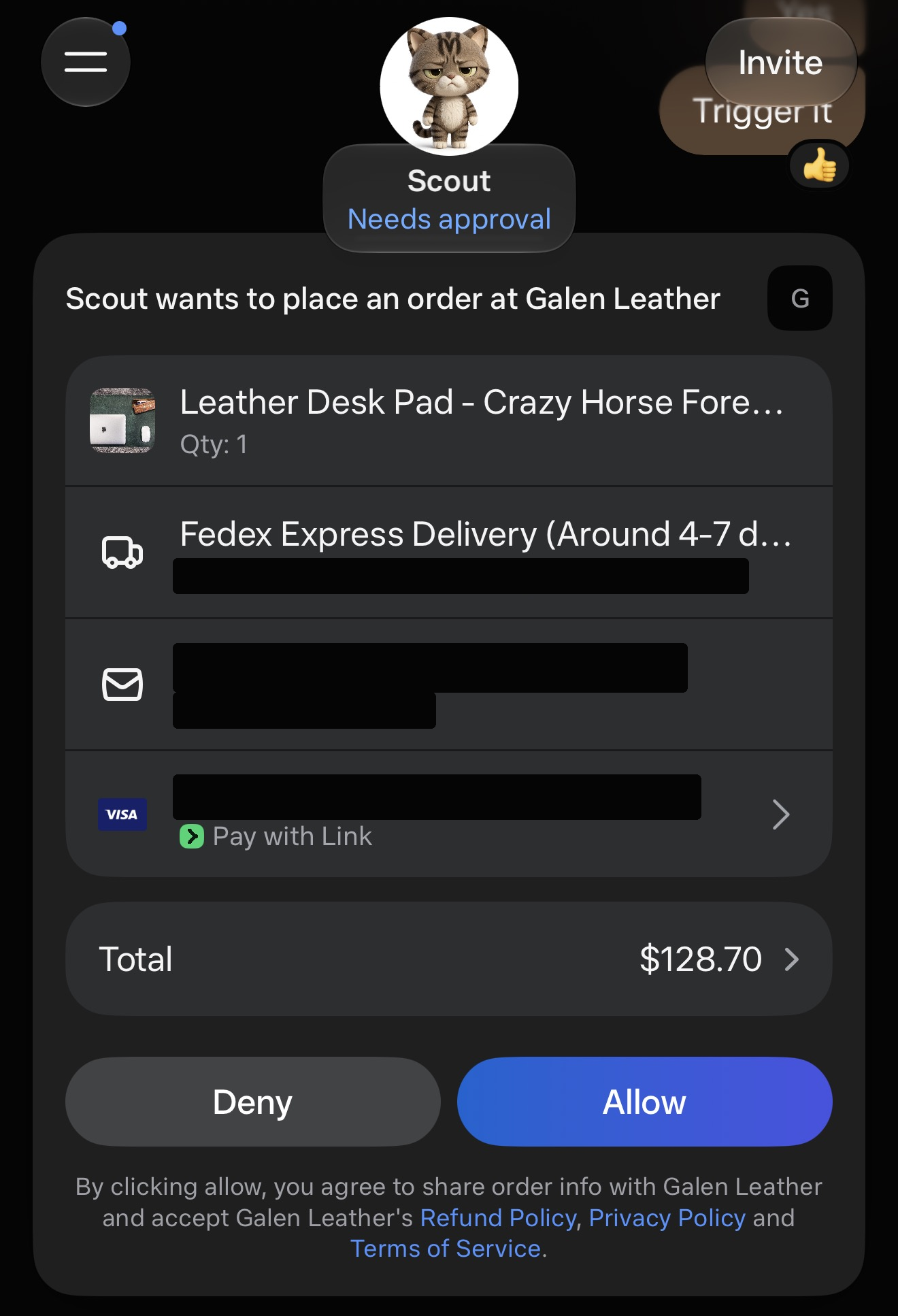
I've spent money through Muse, but I haven't spent anything on Muse itself. The free tokens have been generous enough that I haven't needed to. Would I subscribe if that changed? And what could Meta reasonably expect from users less enthusiastic about AI?
Perhaps subscriptions aren't the point. If Meta can earn meaningful revenue share from transactions like mine, it might not need most users to pay for access. Whether that revenue can justify the cost of serving them is another question.
The danger of being convincing
It's easy to question another company's assumptions about its customers. It's harder when you're the one building a case for a decision and asking others to act on it.
I once questioned an estimate that had become part of how we understood a business. It wasn't something you could simply pull from a financial statement. The underlying data was difficult to piece together, which made the prevailing view harder to test than it was to repeat.
When I worked through the available information, I arrived at a substantially different conclusion. I was confident in my analysis, but that didn't produce immediate agreement. It prompted a closer examination of the evidence and reasoning, including my own.
Imagine spending weeks developing a model that supports an aggressive investment. When conversion disappoints or compute costs decline more slowly than expected, it becomes tempting to explain away the results rather than revisit the original assumptions. Especially if you've already convinced others of the opportunity.
You can build a beautiful financial model and an even better deck around assumptions that turn out to be wrong. The better you become at constructing a convincing argument, the easier it can become to defend a bad hypothesis.
Being good with numbers is necessary in finance, but it isn't sufficient. I'm just as wary of a compelling narrative without financial discipline as I am of a banker-grade model built on shaky assumptions.
Numbers allow us to quantify our beliefs and confront their consequences. But they can't, on their own, tell us which questions matter, how people might behave, or whether our most convincing story is actually true.
That takes judgment, including the willingness to change our minds.